
Most brands only see a picking fee and a tracking number. We want you to see the entire system.
Our nonprofit-powered fulfillment model is built on clear roles: what our company does, what nonprofit partners do, and how your inventory moves through both.
Roles: our 3PL vs nonprofit partners
Our company:
- Owns the logistics architecture: contracts, WMS, SOPs, and carrier relationships.
- Designs workflows to fit the abilities of workers at each partner site.
- Manages quality control, reporting, and performance standards.
Nonprofit and vocational partners:
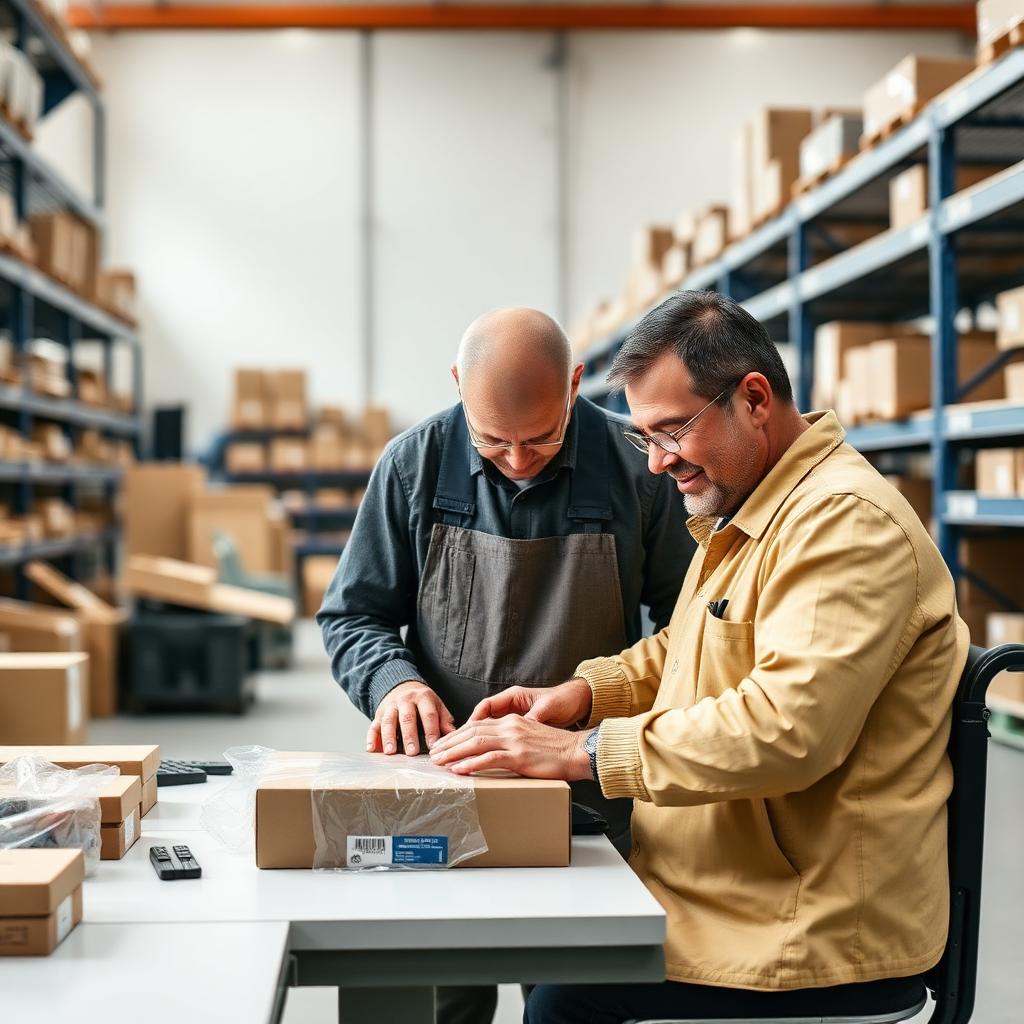
- Provide trained workers with disabilities.
- Supply on-site supervision, job coaching, and HR support.
- Execute defined tasks: kitting, packaging, picking, and light assembly.
You get one accountable 3PL, not a loose network of side deals.
How jobs are structured for workers with disabilities
Inclusive employment is not just "any task for anyone."
We design jobs with:
- Clear, simple steps and visual work instructions.
- Standardized workstations with consistent tools and materials.
- Repetition that builds muscle memory instead of confusion.
Supervisors and job coaches break down tasks into manageable segments, matching work to each person's strengths. The result is accurate, consistent output from a workforce that takes pride in the process.
Inventory flow: brand → warehouse → kitting → shipping
A typical flow looks like this:
-
Inbound receiving
Pallets arrive at our facility or partner site. SKUs are checked against ASNs, labeled, and entered into the WMS. -
Storage and slotting
Fast movers and kitting components are stored in positions optimized for workers' reach and clarity. Bins and racks are labeled in plain language and barcode form. -
Kitting and packaging
Workers assemble bundles, packs, and special editions using step-by-step instructions. Supervisors verify counts and apply QC checks at defined points. -
Order picking and packing
Orders flow from your ecommerce platform into the WMS. Workers pick items by location and SKU; packers bundle and label shipments. -
Shipping and confirmation
Carriers scan and depart; tracking feeds back into your system. Exceptions (damaged, missing, or mispicked) are logged and addressed.
At each step, we document who touched what, when, and under which procedure.
Checks and balances for brands, nonprofits, and workers
We protect all three sides:
- Brands: contract terms, insurance, and data access.
- Nonprofits: fair compensation, realistic expectations, and clear scopes of work.
- Workers: safe tasks, reasonable pace, and stable employment.
We monitor metrics for quality and impact, not just throughput.
Quick FAQ
Is this model slower than a traditional 3PL?
For some SKUs, yes. For most kitting and packaging-heavy work, it is often more consistent and less error-prone.
Do I sign contracts with multiple nonprofits?
No. You contract with us as your 3PL. We contract with nonprofit partners and carry the operational and legal responsibility.
Ready to see how this model could work for your brand? Contact us for a consultation.